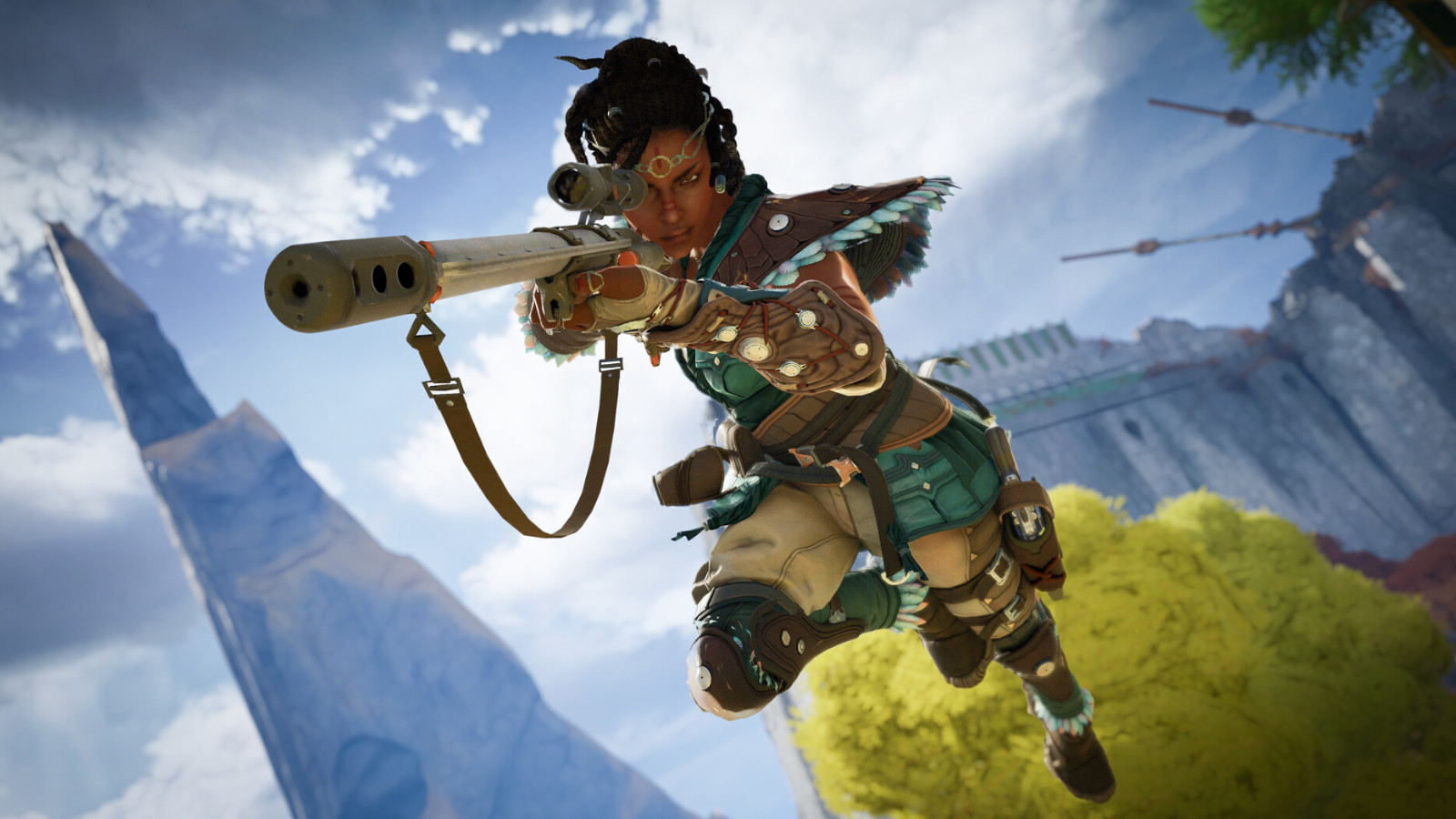

Vous connaissez probablement maintenant l'histoire de Highguard.: Geoff Keighley l'a choisi comme bande-annonce finale présentée aux Game Awards en décembre.. Le film a débuté avec des critiques et des notes médiocres et est maintenant probablement à bout de souffle.. L'équipe de Wildlight Entertainment – du moins ce qu'il en reste – se demande maintenant si cela peut changer les choses, et sinon, quand tombera le dernier marteau?
Il reste encore dix mois 2026, mais pour l'instant Highguard – un jeu relativement mineur dans le grand schéma des choses – restera probablement dans l'histoire comme le plus gros échec de l'année jusqu'à présent. Comment tout cela s'est-il si mal passé et quoi, si quelque chose, Wildlight aurait-il pu faire différemment?
Données dominantes
Voyons d'abord les chiffres, ce qui ne donne pas un joli tableau. La tendance des charts Steam est en baisse significative par rapport au lancement du jeu il y a un mois, quand il a culminé à 15,147 joueurs simultanés. En soi, c'est un chiffre médiocre pour un jeu free-to-play. Actuellement, il y en a en moyenne moins de 1,000 joueurs en même temps.
Légendes Apex, qui a été considéré comme la meilleure comparaison de Highguard, lancé sur Steam à une moyenne de 74,957 joueurs et culminant à 117,193 en novembre 2020. Certes, c'était presque deux ans après le lancement de Stealth, mais il est juste de dire qu’il a attiré bien plus que 15,000 joueurs simultanés lors de ses débuts au début 2019.
Il faut garder à l’esprit qu’un nombre important de joueurs ont probablement prêté attention au jeu simplement en raison de sa machine à sous premium aux Game Awards.. Qu'ils l'aiment ou non, ou simplement joué quelques minutes avant de donner un avis négatif, Keighley a sans aucun doute rehaussé la notoriété du jeu et sans lui, les chiffres auraient été bien inférieurs..
En parlant de critiques: Le sujet du « review bombing » préoccupe de nombreuses personnes et est parfois blâmé pour l’échec du jeu. (injustement) mauvaise réception. Actuellement, le jeu a un 46% note positive sur Steam (Commentaires en anglais uniquement, 45% dans toutes les langues), mais cela pourrait être trompeur. Comme le montre cet articleses chiffres ne sont pas si mauvais si les joueurs lui donnent une chance.
Cependant, Je pense que c'est un peu trop généreux de ne compter que les avis des joueurs ayant joué au moins cinq heures.. Il ne me faut généralement pas beaucoup de temps pour décider si un jeu me convient.. Si j'y ai joué aussi longtemps – surtout s'il s'agit d'un jeu de tir PvP basé sur des matchs qui s'étendrait sur une douzaine de matchs – alors j'aime probablement le jeu, donc la limite de cinq heures équivaut à une sorte de biais de survie d'une certaine manière.
Au moment où j'écris ceci aujourd'hui, Février 25, 2026, voici les avis positifs sur diverses pauses de cours, y compris toutes les langues:
0 heures (tous les avis): 45% sur 39,496 avis
1 heure: 59% sur 26,496 avis
2 heures: 73% sur 17,191 avis
3 heures: 79% sur 12,889 avis
4 heures: 81% depuis 9,915 avis
5 heures: 82% depuis 7,754 avis
8 heures: 83% depuis 4,393 avis
10 heures: 82% depuis 3,258 avis
Cela dresse certainement un tableau plus rose, car le jeu a une note positive d'environ 80% parmi les joueurs qui lui ont donné une solide chance.
Puisqu’il y a probablement eu beaucoup de bombardements de critiques lors de la sortie initiale du jeu, voici un aperçu de la façon dont les critiques se comparent au fil des différentes périodes depuis la sortie:
Première semaine: 41% depuis 31,120 avis
Deuxième semaine: 67% sur 3,119 avis
Troisième semaine: 60% sur 1,214 avis
Quatrième semaine: 58% sur 736 avis
Cinquième semaine (jusqu'à présent): 65% sur 160 avis
C'est moins positif, mais cela confirme au moins que le pire des dégâts a été fait dès le début.
Maintenant la mauvaise nouvelle: Ce n’est toujours pas assez bon pour le type de jeu qu’est Highguard.. Alors que 80% sur Steam est la frontière entre « Mixte » et « Très Positif »," C'est vraiment juste moyen, au mieux.
Il y a de nombreuses années, quand Steam Spy existait, son responsable a souligné que le score moyen sur Steam était 82%. Cela signifie que la moitié de tous les jeux étaient au-dessus 82% et l'autre moitié était en dessous. Donc, un jeu noté 80% était en fait dans la moitié inférieure des jeux; Il y avait plus de jeux avec une note supérieure que inférieure.
Le nouveau tableau « Distribution des notes d'évaluation ». sur cette page semble confirmer à peu près cette constatation, car environ la moitié de tous les jeux se déroulent de chaque côté de 80%.
Pensez-y comme si vous aviez des jeux sur votre liste de souhaits Steam ou dans votre bibliothèque. Ils sont tous “bien” dans le sens où tu auras envie de les jouer, mais je n'ai probablement pas le temps de tous les traiter. Donc tu joues aux jeux que tu aimes le plus et rarement, si jamais, accédez aux jeux qui se trouvent en bas de votre liste.
La même chose s'applique à un jeu avec un niveau de 80%. C'est bon, vous l'aimez, et peut-être que c'est même objectivement “bien,” mais il y a des choses que tu préfères. C'est le sort de beaucoup de bons, mais pas génial, jeux.
Jetez un autre œil aux avis positifs par heure répertoriés ci-dessus. Parmi les joueurs qui ont apprécié le jeu à un 80% augmenter (3+ heures), seulement 3,258/12,889 = 25% je l'ai joué pendant un maximum 10 heures ou plus. Cela signifie que trois personnes sur quatre qui aiment vraiment le jeu n’ont même pas joué depuis dix heures.. À combien de jeux avez-vous joué plus de 10 heures le mois dernier? J'imagine qu'il y en a pas mal, et ça veut dire qu'ils sont meilleurs (pour toi) que Highguard.
Highguard était peut-être très populaire auprès d'un sous-ensemble de personnes, mais était-ce suffisant pour les rendre accros à Apex Legends, Surveillance, Ligue des Légendes, Fortnite, ou quel que soit le jeu de tir d'extraction/héros ou même le MMORPG auquel ils jouent régulièrement? La réponse semble être « non ».
Le chemin du retour
Alors, qu’aurait pu faire Wildlight Entertainment pour éviter cette situation ?? La réponse évidente est « améliorer le jeu," mais ce n'est qu'une partie, et subjectif en plus.
Auraient-ils dû décliner l’offre de Geoff Keighley de publier la bande-annonce à la fin des Game Awards ?? Comme je l'ai déjà mentionné, cette révélation signifie que Highguard n'a probablement qu'autant de joueurs débutants qu'avant, et si ça ne suffisait pas pour garder les lumières allumées (comme il semble que ce ne soit pas le cas), alors la moitié, voire moins, des joueurs n'auraient pas.
La principale erreur, à mon avis, c'est qu'ils n'ont pas tiré le meilleur parti du cadeau sur lequel ils sont tombés par hasard. Dans les sept semaines entre les Game Awards et la sortie de Highguard, nous n'avons pratiquement rien entendu sur le jeu. Une équipe intelligente aurait préparé les supports marketing dès la sortie de la bande-annonce., ou au moins le lendemain des Game Awards. Normalement, cela aurait été une suite à la grande annonce, mais dans ce cas, le plan aurait été, au moins en partie, limiter les dégâts après la réaction du public.
A tout le moins, l'équipe aurait dû se rendre compte entre-temps que la perception du public à l'égard de Highguard n'était pas très bonne et s'efforcer de corriger cela.. Au lieu de cela, comme La chaîne YouTube du jeu Comme il s'avère, rien n'a été posté entre le premier trailer et la sortie, après quoi une série de vidéos ont été publiées mettant en avant le gameplay, la vision du développeur et les éléments individuels.
Cependant, à l'époque, les gens préféraient jouer au jeu et se forger leur propre opinion, pour le meilleur ou pour le pire, plutôt que de regarder des vidéos à ce sujet. Les développeurs avaient perdu le droit de façonner le récit en laissant les sentiments négatifs s'envenimer pendant près de deux mois sans rien faire.. Ils ont placé tous leurs espoirs dans l'état du jeu – probablement à cause d'une chose Culture de positivité toxique – et chaque opportunité de développer la bonne volonté a été manquée.
Nous sommes tous fatigués des innombrables teasers, remorques, vidéos à la mode, journaux des développeurs et marketing en général pour les jeux qui seront dans des mois ou des années, mais Highguard en est un parfait exemple plus Le marketing et le battage médiatique étaient nécessaires de toute urgence. Le fait qu'ils avaient toutes ces vidéos prêtes dès leur sortie rend leur décision de se retenir encore plus déroutante.. Peut-être que ça n'aurait pas d'importance – peut-être que le jeu n'était tout simplement pas encore prêt et aurait dû sortir sept mois après les Game Awards au lieu de sept semaines – mais ça n'aurait pas pu faire de mal. Maintenant, il est probablement trop tard.