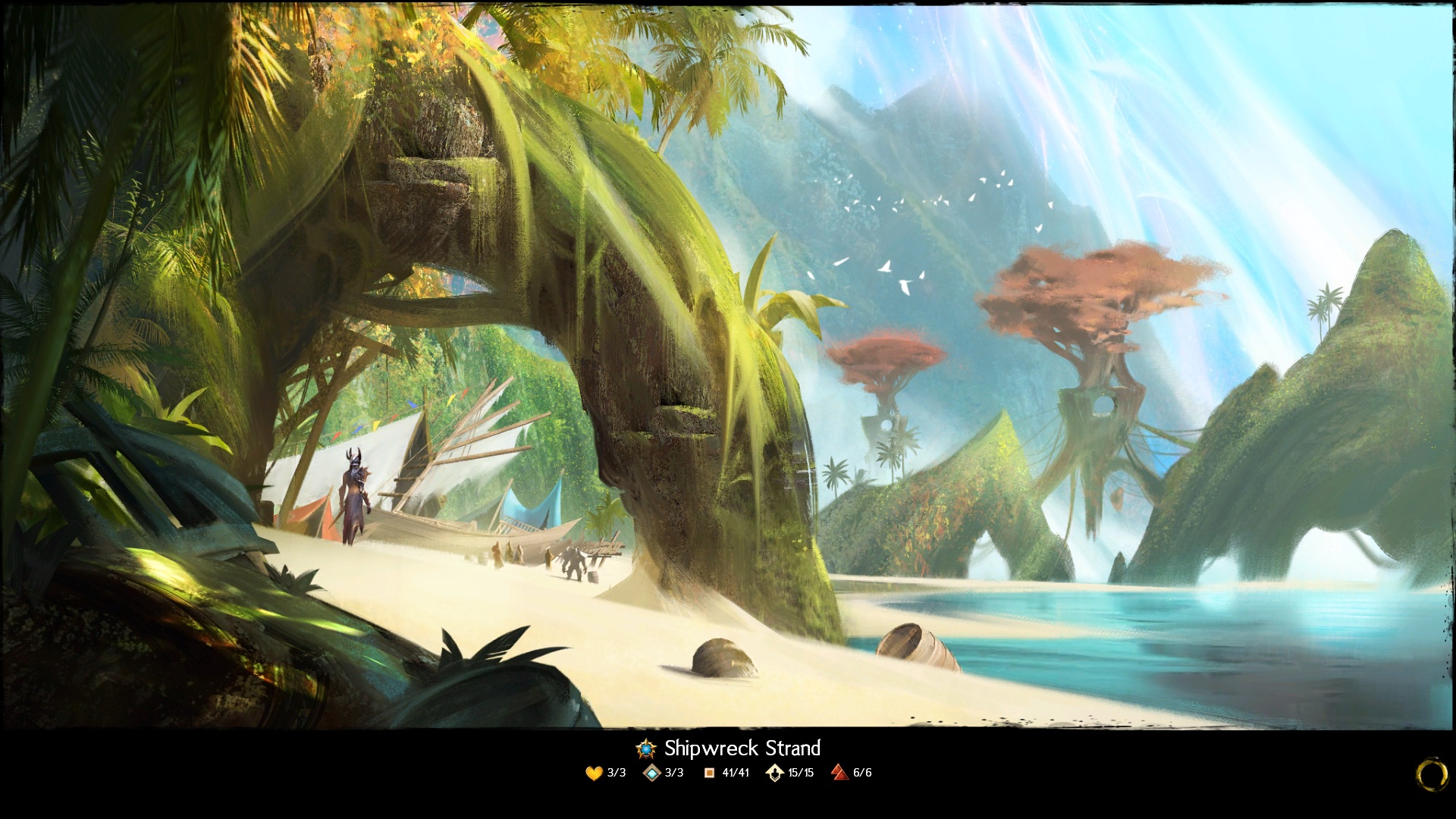

Il y a onze ans et cinq mois, J'ai assisté au grand événement de révélation de la première extension de Guild Wars 2, Coeur d'épines, à la PAX Sud à San Antonio. L'expansion a commencé il y a dix ans et huit mois.
Cela correspond à un délai de neuf mois à compter de l'annonce (qui a coïncidé avec la dernière mise à jour majeure du contenu avant l'extension) et le lancement de l'extension. Et je te le dis, c'étaient ces neuf mois brutalement.
Il ne s’agit pas d’une tentative de ressasser les problèmes rencontrés par ArenaNet lors de la finalisation de l’extension., qui manquait plusieurs éléments clés lors de sa sortie en octobre 2015, mais plutôt la réaction de la communauté face au long écart. Il s'est ensuite écoulé neuf mois supplémentaires entre la sortie de l'extension et la prochaine mise à jour majeure du contenu., qui est sorti en juillet 2016.
Ce n'était pas un bon moment dans la communauté, surtout pour un jeu qui se vantait autrefois de mises à jour toutes les deux semaines. Même si les mises à jour s'étaient produites selon un calendrier plus normal, disons tous les trois à six mois, un intervalle de neuf mois aurait mis à l'épreuve la patience même du fan le plus ardent. Deux d'entre eux d'affilée étaient insupportables.
Et pourtant… dans le laps de temps actuel, environ six mois et demi se sont écoulés entre la sortie de la dernière extension (Octobre 28, 2025) et le dernier chapitre de l'histoire (Peut 12, 2026) sans la moindre trace d'insatisfaction, du moins pour autant que je sache.
Je pense à tout cela maintenant parce que je me rends compte que ces jours de 2015-2016 C'était la dernière fois que je me souciais vraiment du temps qu'il fallait à un jeu pour une mise à jour majeure.. Ces jours-ci, ça ne me dérange pas autant, surtout parce que j'ai tellement d'autres façons de passer le temps.
Des options à gogo
Je sais 2015-2016 c'était il n'y a pas si longtemps (seulement trois ou quatre ans, droite?), mais c'était une époque très différente, surtout compte tenu du chemin parcouru par le jeu depuis lors. Bien qu’il n’y ait pas eu beaucoup de MMORPG sortis depuis – dont j'ai parlé il y a quelques mois – il y a eu beaucoup d'autres jeux sortis depuis qui sont tout aussi nuls que les MMO.
Au sommet se trouvent des jeux comme Fortnite et Overwatch ainsi que toutes leurs ramifications et clones de Battle Royale ou de Hero Shooters. Ajoutez à cela la multiplication des jeux de survie, combattants automatiques, la présence continue des MOBA et des anciens favoris comme CS:ALLER, et le flot de jeux solo ou même de services de streaming pour capter notre attention, et du coup, cela ne semble pas si grave que votre jeu en ligne préféré passe des mois entre les mises à jour.
Du moins c'est comme ça pour moi. Le jeu que j'ai le plus suivi durant cette période était Overwatch, qui avait une pause assez longue dans les mises à jour de contenu avant Overwatch 2. ça m'a un peu énervé, mais j'ai juste ignoré ça et j'ai surtout joué à d'autres trucs pendant un moment.
C'est peut-être parce que je mûris (peu probable!) et je n'ai pas envie de me donner la peine de critiquer les développeurs, ou peut-être que c'est parce que je n'ai plus besoin de ce seul jeu pour occuper mon cerveau. Si un jeu ne parvient pas à retenir mon attention, Je n'ai aucun problème à passer à un autre produit de divertissement et à revenir à mon ancien produit préféré le moment venu..
Bien que ce ne soit techniquement pas un jeu en ligne (bien qu'il propose le multijoueur), Je suis dans la même situation en ce moment avec Crusader Kings 3, un jeu auquel j'ai joué presque 1,700 heures. La dernière mise à jour majeure du jeu a eu lieu en octobre, et la vidéo du mois dernier faisant la lumière sur l'avenir suggérait que le prochain DLC n'arriverait pas avant septembre de cette année.. Il y avait un problème majeur “entretien” mise à jour ce mois-ci, mais il reste encore presque une année complète entre les sorties de contenu majeures.
Et je suis d'accord avec ça.
Honnêtement, ce jeu avait désespérément besoin d'un "pass de maintenance"," et je suis content qu'il en ait un, même si cela se fait au détriment du nouveau contenu. De nos jours, il semble que de plus en plus de jeux puissent avoir des périodes plus longues comme celle-ci., et je pense que leurs joueurs et leurs chefs d'entreprise font preuve d'un peu plus de patience.
Prendre le temps de bien faire les choses
Comme n'importe quel produit, les jeux doivent rapporter de l'argent. Et le moyen le plus sûr de gagner plus d’argent est de publier du nouveau contenu. Nous entendons tout le temps dans les rapports financiers comment « l’expansion X de notre jeu Y a augmenté nos revenus à $11 millions au troisième trimestre,» ou une variante de celui-ci. Cela n'est pas moins vrai pour les jeux privés, où il n'y a pas d'actionnaires à qui répondre.
Donc, les développeurs de jeux sont obligés de publier régulièrement du nouveau contenu pour maintenir le flux de joueurs – et leur argent – en allant. Une période prolongée sans contenu rend les choses extrêmement difficiles – tant pour les comptes bancaires des développeurs que pour les pauvres community managers qui doivent faire face à une base de joueurs de plus en plus insatisfaits.
Au moins c'était comme ça avant. Alors que la plupart des jeux en ligne de nos jours ont un calendrier de sortie assez solide, même manquer un battement ou deux n'est pas le glas comme c'était le cas autrefois.
Chaque fois qu’une fusion ou une acquisition se produit, dans le communiqué de presse l'annonçant, nous inclurons, entre autres, un soupçon de, “Faire partie de BigCompany nous donne la flexibilité nécessaire pour innover et nous fournit les ressources dont nous avons besoin pour soutenir notre entreprise dans les années à venir.”
C'est un peu cliché de nos jours, mais je pense qu'il y a un peu de vérité là-dedans. Je pense que la plupart des développeurs et leurs propriétaires sont devenus plus réalistes quant à leurs chances de produire le prochain World of Warcraft., League of Legends ou Fortnite. Bien sûr, ils veulent toujours être gros et gagner de l'argent, mais la dernière décennie et plus ont montré à la plupart d’entre eux que ce succès est irrégulier et imprévisible., peu importe à quel point tu es intelligent (ou je pense que tu l'es).
Et les jeux existants peuvent subir des temps d'arrêt sans échouer complètement.. Bien sûr, des licenciements massifs surviennent encore occasionnellement (ou pas, de temps en temps), mais c'est mieux que l'extinction totale.
L'exemple que j'ai donné de Guild Wars 2 est une excellente analogie. Depuis 2013 à 2017, le revenu moyen était 23.4 milliards de won coréens par trimestre. Cela s'étend sur la période allant de quatre mois après la sortie jusqu'à deux versions d'extension..
Au cours des quatre prochaines années, 2018 à 2021, il n'y avait que du gratuit (bien que régulier) mises à jour et pas d'extensions complètes, et ce nombre est tombé à 17.1 milliard. Au milieu de cette triste époque, des licenciements ont eu lieu chez ArenaNet en février 2019.
Depuis lors, l'entreprise est passée à un rythme d'expansion plus fréquent (si je comprends bien, cela a été mandaté par NCSoft) et les ventes ont considérablement repris. Mais combien cela aurait été pire sans la propriété souvent déplorée de NCSoft.?
Ceci est une version de ce que j'ai décrit dans ma vie personnelle, comment puis-je gérer des lacunes plus importantes dans le contenu parce que je peux passer mon temps libre à faire beaucoup d'autres choses. De la même façon, des entreprises qui disposent d'un large éventail de développeurs, comme NCSoft, Microsoft ou le plus gros éléphant dans la pièce, Tencent, peut se permettre de donner aux développeurs un peu plus de temps pour bien faire les choses.
Ce n’est pas une analogie parfaite car il y aura toujours des acteurs ou des entreprises impatients qui veulent de nouvelles choses. (ou plus d'argent). Maintenantet il faut quand même se méfier si une ou plusieurs entreprises contrôlent trop de parts de marché, mais nous semblons reconnaître les avantages d'un tel système tels qu'ils sont. Si c’est le petit bien que nous pouvons retirer de toutes les fusions et acquisitions (et les licenciements qui les accompagnent souvent), alors autant nous rejoindre.